
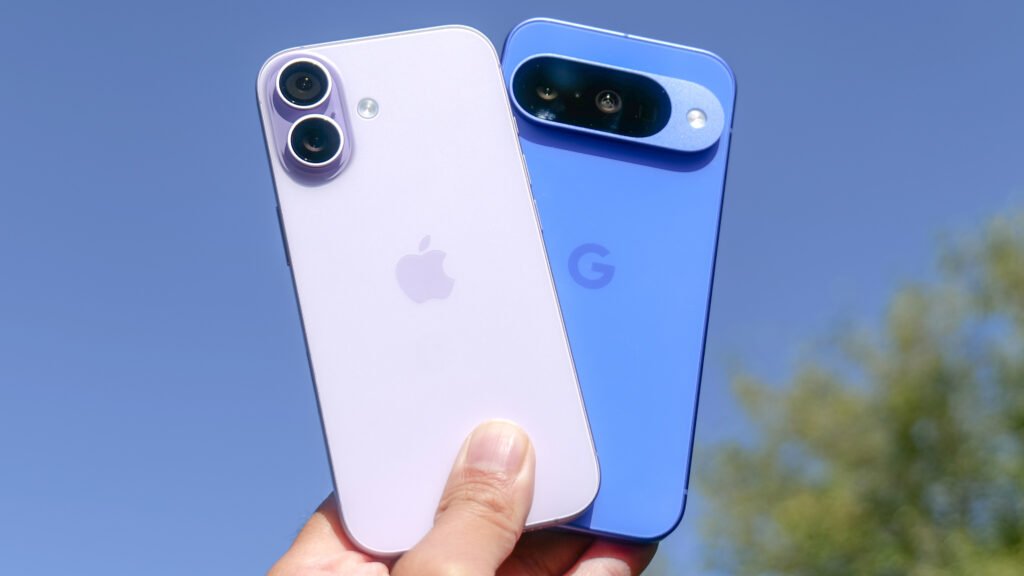
For years, the debate between Apple and Google has centered around one question: iPhone 17 vs Google Pixel 10?
Traditionally, when it came to base models, many tech enthusiasts recommended Pixel phones because they often delivered better value. However, in 2025 the situation has shifted. The new iPhone 17 may actually offer a better overall package than the Google Pixel 10.
That may sound surprising, especially for long-time Android fans, but there are solid reasons behind this conclusion. Let’s break down the hardware, software, performance, and camera differences to see which phone truly offers the best value.
iPhone 17 vs Pixel 10: Price and Storage Comparison
Both smartphones start at roughly $799, but the value you get at that price is very different.
The Pixel 10 base model starts with 128GB of storage, while the iPhone 17 comes with 256GB.
If you want the same 256GB storage on the Pixel, you have to spend an extra $100.
In 2025, 128GB is becoming increasingly limiting, especially for a device designed to last several years. With photos, videos, apps, and system updates taking more space, 256GB provides a much more future-proof experience.
From a value perspective, the iPhone already starts with a clear advantage.
Display Quality and Design
Both phones offer 120Hz displays, but there are important differences.
The iPhone 17 uses LTPO ProMotion technology, which allows the refresh rate to scale between 1Hz and 120Hz. This helps save battery life and enables features like Always-On Display.
The Pixel 10 also has a 120Hz display but only drops to 60Hz at minimum. That means it cannot reduce power consumption as efficiently.
Other display differences include:
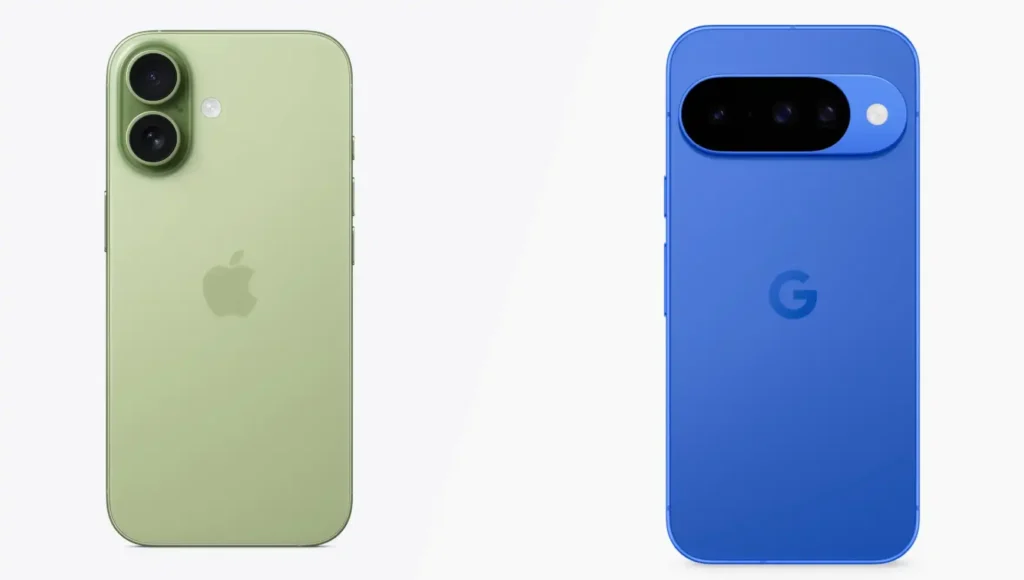
- The iPhone has slimmer bezels, giving it a more immersive look.
- Pixel 10 has slightly lower resolution.
- Apple includes anti-reflective display coating for better outdoor visibility.
While the differences are subtle, the iPhone display feels slightly more refined overall.
Weight and Battery Experience
The Pixel 10 has a larger battery, but it is also about 30 grams heavier than the iPhone 17.
In daily usage, the battery life between the two phones feels quite similar. Despite the smaller battery, Apple’s efficiency and hardware optimization allow the iPhone to keep up with the Pixel.
Because the Pixel is heavier without delivering dramatically better battery life, the advantage here is smaller than expected.
Android 16 vs iOS 26: Software Experience
Where Pixel phones usually shine is software.
The Pixel 10 runs Android 16, featuring Google’s Material design improvements and smooth animations. The interface feels polished, responsive, and complete.
Meanwhile, the iPhone 17 ships with iOS 26.
While iOS 26 introduces new design elements such as “Liquid Glass” effects, it currently feels less refined than Android 16. Early users have reported bugs and inconsistent interface elements.
In terms of usability and polish, Android 16 on Pixel still feels more mature.
AI Features: Gemini vs Siri
Artificial intelligence is becoming a major part of smartphones, and this is where the Pixel clearly stands out.
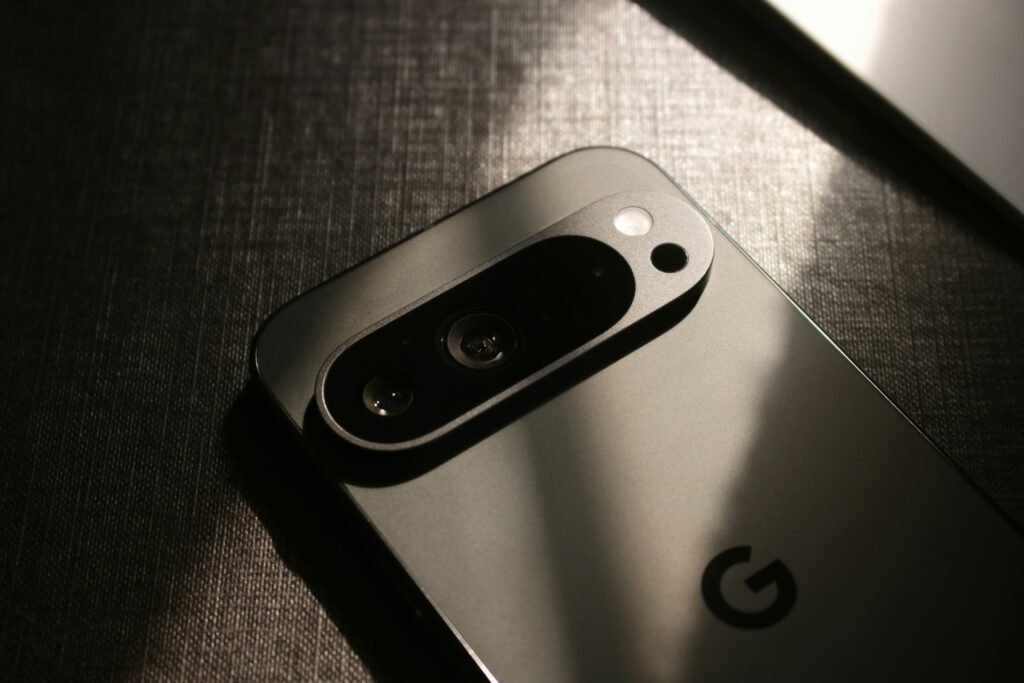
The Pixel 10 integrates Google Gemini, which provides advanced AI responses, contextual help, and powerful search tools like Circle to Search.
On the other hand, the iPhone still relies heavily on Apple Siri, which struggles with more complex queries.
For example, Gemini can quickly answer questions, summarize information, and provide contextual responses. Siri often requires external integrations or additional steps to complete similar tasks.
When it comes to AI capabilities, the Pixel 10 delivers a noticeably smarter experience.
Performance: Apple Still Leads
In raw performance, Apple continues to dominate.
The Apple A19 chip inside the iPhone 17 significantly outperforms the Google Tensor G5 used in the Pixel 10.
Benchmark tests show that the iPhone delivers:
- Faster CPU performance
- Better graphics processing
- Lower heat generation during heavy tasks
- More efficient battery usage
For gaming and demanding applications, the iPhone provides a noticeably smoother experience.
Charging and Wireless Features
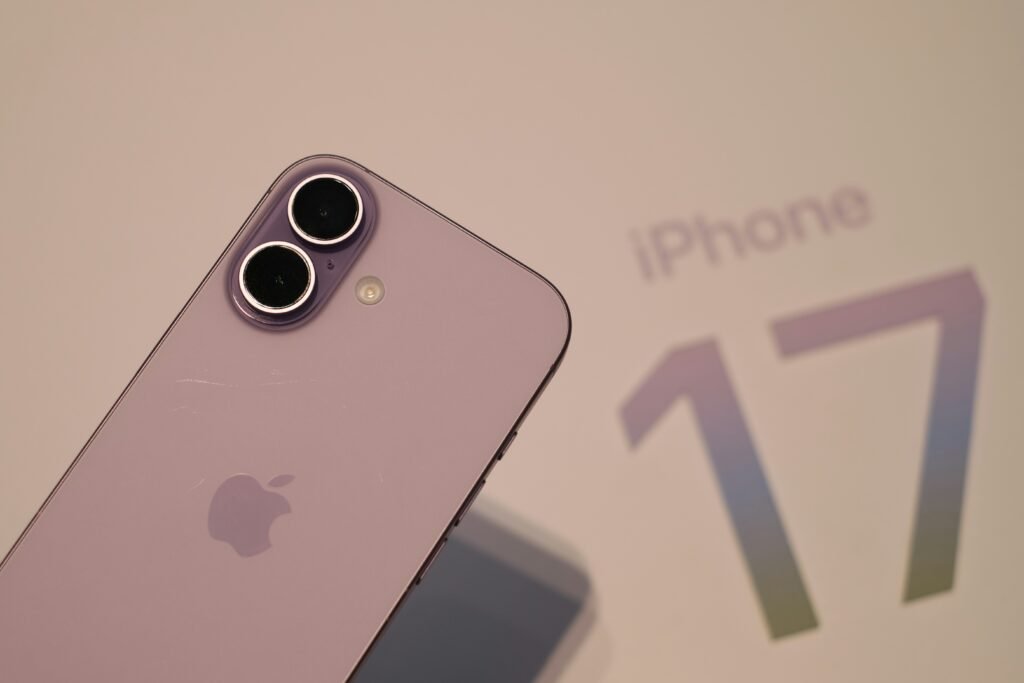
Charging speed is another area where the iPhone holds an advantage.
In real-world testing:
- iPhone 17 reaches about 55% charge in 20 minutes
- Pixel 10 reaches about 50% charge in 30 minutes
Wireless charging also differs:
- iPhone supports 25W wireless charging
- Pixel supports 15W wireless charging
The Pixel introduces Pixel Snap, a magnetic accessory system similar to Apple’s MagSafe, but charging speeds remain slower.
Camera Comparison
Camera performance is always a key reason people choose Pixel phones.
Zoom Photography
The Pixel’s dedicated zoom lens gives it a strong advantage for optical zoom photos, especially in low-light conditions. Digital zoom on the iPhone introduces more noise and reduces detail.
Main Camera
The main cameras on both devices perform well. However:
- iPhone photos often have a warmer color tone
- Pixel photos look slightly more natural
Dynamic range is excellent on both, though the Pixel has a slight edge in certain lighting conditions.
Ultra-Wide Camera
The iPhone wins here thanks to a larger ultra-wide sensor, which captures more detail and performs better in low-light situations.
Video Recording: iPhone Remains the Leader
For video recording, the iPhone still sets the industry standard.
The iPhone 17 offers:
- Better stabilization
- Sharper video detail
- Superior low-light video performance
The Pixel 10 produces good video, but it cannot match the consistency and quality of iPhone footage.
If video recording is important to you, the iPhone is clearly the better choice.
Final Verdict: Which Phone Should You Buy?
For years, Pixel phones were the easiest recommendation in the base smartphone category. They delivered great cameras, strong software, and good value.
However, in 2025 the iPhone 17 provides a stronger overall package.
Choose the iPhone 17 if you want:
- Better performance
- More storage at the base price
- Faster charging
- Best-in-class video recording
Choose the Pixel 10 if you want:
- Better AI features
- Smarter software experience
- Strong zoom photography
- Clean Android interface
Overall, the iPhone 17 currently offers better value for most buyers at the base price. That does not make the Pixel 10 a bad phone, but the competition has become much stronger.
If anything, this rivalry will push Google to innovate further with the next generation, and that is good news for smartphone users everywhere.